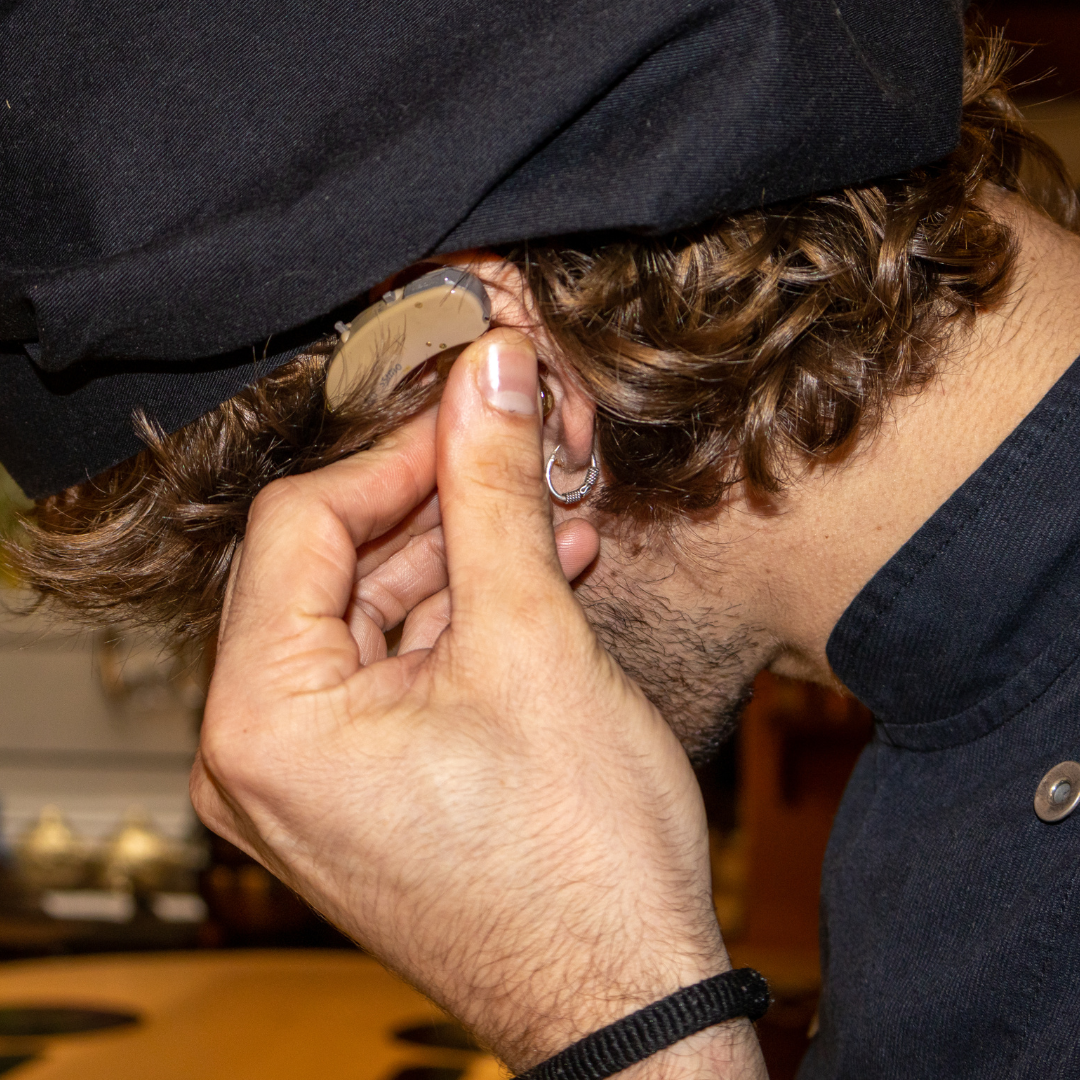
Active restaurant conversations are frequently hard to decipher when surrounding background noise clashes with your hearing. Our audiology clinic conducts specialized testing to evaluate hearing in both quiet sound booths and noisy simulations to isolate the underlying cause. After uncovering the precise factors driving your difficult hearing, our team helps you select individualized auditory solutions.
Why Do I Hear Well in Quiet but Struggle in Restaurants?
Quiet rooms provide a favorable signal-to-noise ratio, meaning a speaker’s voice is much clearer than the sounds around it. Busy dining establishments generate the exact reverse scenario. Layered diner voices, kitchen activity, foreground music, and room reverberation muddy speech signals, requiring intense mental strain to follow dialogue.
Such listening challenges typically stem from high-frequency hearing loss, auditory-processing deficits, or accumulated noise-induced trauma. Poor visual illumination, mental fatigue, physical distance from the speaker, and divided focus exacerbate speech-recognition problems. Some patients pass standard pure-tone evaluations with normal scores yet exhibit substantial impairment during specialized speech-in-noise testing. Communication breakdowns in loud restaurants should be professionally assessed even if one-on-one listening feels uncompromised.
Diagnosing High-Frequency Hearing Loss and Clarity Issues
Diagnostic assessment begins by documenting specific listening breakdowns, recreational noise exposure, tinnitus symptoms, medications, and hereditary auditory patterns.
Pure-tone audiometric evaluations measure the absolute quietest sounds audible across specific octave frequencies using air and bone conduction. Patients with high-frequency hearing loss typically exhibit a sloping audiogram configuration where sensitivity steadily declines at elevated pitches. Further clinical diagnostics feature tympanometry to evaluate eardrum and middle-ear mechanics as well as word-recognition testing for speech comprehension.
Because testing in a silent booth does not mirror real-life restaurant environments, speech-in-noise testing supplies vital diagnostic clarity. It measures how well you recognize words or sentences as competing sounds become louder. Interpreted together, these clinical scores demonstrate whether listening struggles originate from loss of audibility, speech clarity deficits, auditory processing delays, or combined elements.
Auditory Processing Disorders: Impact on Adult Communication
An auditory processing disorder compromises how the central auditory pathways and brain decode incoming acoustic information. The peripheral auditory system may register sounds within normal limits, yet the brain falters when separating competing acoustic inputs, sorting speech sounds, or tracking fast speech. We first evaluate peripheral hearing and then determine whether an individualized auditory-processing test battery or referrals to other professionals are appropriate.
Practical Strategies for Improving Speech Understanding in Noise
Small, intentional adaptations can optimize the clarity of speech reaching your ears and leverage helpful visual speech cues. Before heading out to eat, select dining spots with quieter acoustic profiles or dine during low-volume hours. Dining locations utilizing sound-absorbing elements like booths, felt panels, window curtains, and carpet offer better acoustics than high-ceilinged rooms with hard surfaces.
When arriving at the dining venue:
- Select a secluded table situated away from prep kitchens, crowded bar stations, loudspeaker zones, and large parties.
- Sit with a perimeter wall directly behind you to cut down on ambient noise approaching from the rear.
- Face your speaking partners directly in well-illuminated seating to maximize visual speech cues.
- Maintain the shortest comfortable physical distance between yourself and your conversation partner.
- Turn your better-hearing ear toward the specific speaker you want to hear most clearly.
- Request that companions rephrase misunderstandings using different words rather than repeating the same sentence.
- Validate significant pieces of information directly rather than feigning understanding during dialogue.
- Excuse yourself for a momentary quiet pause when listening exhaustion starts to mount.
- Request that dining partners articulate words distinctly at an unhurried, natural speed.
- Shouting can distort speech and does not necessarily make words easier to understand.
Advanced Technology for Hearing in Background Noise
Determining the proper hearing technology hinges on the underlying disorder, everyday listening environments, and whether peripheral hearing loss is diagnosed. Prescription hearing aids fitted by an audiologist leverage directional microphone arrays, advanced digital noise reduction, and dedicated restaurant programs to focus on frontal speech while dampening background sound. Maintaining realistic expectations remains essential, as no auditory device can isolate conversation by removing all surrounding voices.
Incorporating a dedicated remote microphone provides an even more pronounced improvement in signal-to-noise ratio. The microphone is placed near or worn by the speaker and sends that voice directly to compatible hearing aids or another receiver. Direct audio routing minimizes the acoustic penalty of conversational distance and surrounding environmental din.
Other clinically valuable tools include:
- Multi-directional table microphones designed for small dinner gatherings
- Hearing-loop telecoils that stream clean audio in loop-equipped establishments
- Real-time smartphone speech-to-text transcription and live-captioning apps
- Over-the-counter hearables equipped with directional speech-enhancement algorithms
- Sound-level or restaurant-review tools for finding quieter locations
We will help compare available technology, verify device compatibility, and instruct you on utilizing your selected hearing equipment.
How Medical and Audiology Specialists Resolve Hearing in Noise
Clinical hearing evaluations progress the diagnostic process past the typical assertion that hearing is adequate in quiet. We examine the challenging acoustic venues, conversational setups, and noise profiles you encounter to select appropriate diagnostic tests. Your diagnostic appointment may incorporate pure-tone air and bone thresholds, acoustic middle-ear testing, word-recognition scores, and speech-in-noise measures. Auditory-processing testing may be considered when the history and initial results support it.
Sudden, one-sided, or rapidly worsening symptoms may require medical evaluation by an ear, nose, and throat physician. Individualized diagnostic care pinpoints the precise physiological etiology rather than merely blaming restaurant noise for communication struggles.
Schedule a Hearing Evaluation Today
If dining in loud spaces leaves you feeling isolated, fatigued, or guessing at missed speech, contact us to schedule a thorough hearing evaluation. We can explore ways to help with hearing in noisy environments with hearing-aid adjustments, assistive tools, or rehabilitation options that may fit your needs.
Connect with us today to arrange your clinical visit and take the first step toward clearer, easier dining communication.
