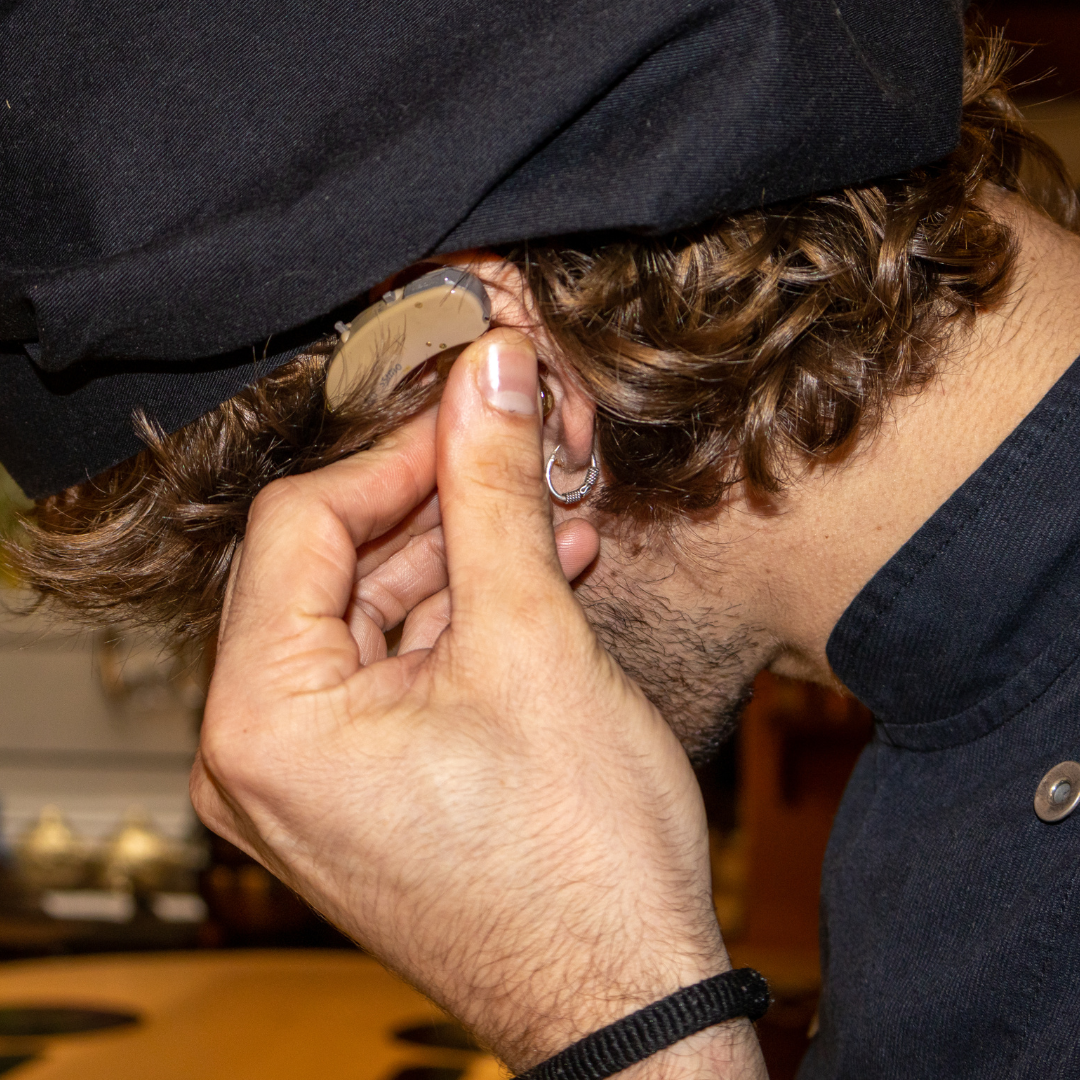
Tracking speech in busy dining venues can feel exhausting when environmental noise drowns out your hearing. Our specialists can evaluate hearing under both calm and noisy listening conditions to establish why noisy rooms present such difficulty. After diagnosing the source of your difficult hearing, we design targeted interventions tailored to your listening needs.
Why Do I Hear Well in Quiet but Struggle in Restaurants?
A quiet setting creates an optimal signal-to-noise ratio, ensuring the conversational partner’s voice rises cleanly above ambient sounds. Dining venues establish an entirely contrary auditory challenge. Overlapping chatter, piped music, kitchen clatter, and hard-surface reverberation mask speech, forcing the brain to expend immense cognitive effort to track conversation.
Such listening challenges typically stem from high-frequency hearing loss, auditory-processing deficits, or accumulated noise-induced trauma. Cognitive exhaustion, physical fatigue, low ambient lighting, and increased distance from your conversational partner further compound the challenge. Certain patients demonstrate normal sensitivity on routine audiograms while struggling significantly during advanced speech-in-noise testing. Difficulty in restaurants deserves evaluation even when everyday hearing seems normal.
Diagnostic Protocols for High-Frequency Hearing Loss
We begin with a history of the situations that cause trouble, along with questions about noise exposure, tinnitus, medications, family history, and changes in either ear.
Diagnostic pure-tone audiometry establishes the softest auditory thresholds you can perceive across standardized frequencies via air and bone conduction pathways. A clinical presentation of high-frequency loss produces a downward-sloping audiogram where auditory thresholds worsen significantly at higher frequencies. Comprehensive evaluations frequently include impedance tympanometry to examine middle-ear function and recorded word-recognition testing to measure speech understanding.
Standard quiet test booths fail to simulate real-world restaurant noise, making speech-in-noise testing a crucial clinical tool. The test assesses word and sentence discrimination as background acoustic competition intensifies. Together, these audiological findings indicate whether the issue involves sound audibility, speech intelligibility, noise-processing dysfunction, or multiple compounding factors.
Adult Auditory Processing Disorders and Speech Perception
An auditory processing disorder compromises how the central auditory pathways and brain decode incoming acoustic information. A patient’s ears may demonstrate normal pure-tone sensitivity, but their central processing system struggles to separate background babble, distinguish consonant sounds, or follow swift discussions. We first evaluate peripheral hearing and then determine whether an individualized auditory-processing test battery or referrals to other professionals are appropriate.
What Strategies Can Improve Hearing in Noisy Environments?
Minor environmental adjustments can boost speech acoustic signals and supply critical visual lip-reading cues. Prioritize dining at establishments designed with subdued acoustics or reserve tables during non-peak business hours. Settings constructed with comfortable booths, acoustic ceiling panels, drapery, and carpeted walkways facilitate easier communication than open venues with concrete and glass.
Upon entering the restaurant:
- Select a secluded table situated away from prep kitchens, crowded bar stations, loudspeaker zones, and large parties.
- Position yourself with your back toward a solid partition to dampen intrusive background noise from behind.
- Face your speaking partners directly in well-illuminated seating to maximize visual speech cues.
- Reduce physical spacing between yourself and companions to maximize direct speech perception.
- Position your better-hearing ear directly toward your main conversational partner.
- Ask speakers to reword the specific phrase you missed rather than repeating their initial wording.
- Explicitly repeat back important logistical details instead of pretending you caught every word.
- Allow yourself a short listening respite when auditory concentration starts to feel drained.
- Ask dinner guests to speak with clear enunciation at a steady, natural conversational rate.
- Yelling distorts natural speech formants and rarely makes spoken words easier to decipher.
Assistive Hearing Tools and Technology for Complex Acoustic Environments
Appropriate hearing technology is dictated by the precise diagnosis, primary listening environments, and the degree of diagnosed hearing loss. Professionally fitted hearing aids may use directional microphones, digital noise reduction, and dedicated restaurant programs to emphasize speech from the front and reduce some competing sound. Users should establish realistic expectations because no hearing device can fully eradicate all unwanted ambient speech.
Incorporating a dedicated remote microphone provides an even more pronounced improvement in signal-to-noise ratio. Positioned near or clipped to the speaker, the device transmits raw speech audio directly to paired hearing aids or external listening receivers. Direct audio routing minimizes the acoustic penalty of conversational distance and surrounding environmental din.
Supplementary auditory solutions include:
- Dedicated table microphones engineered to capture small-group dialogue
- Hearing-loop telecoils that stream clean audio in loop-equipped establishments
- Mobile phone live-transcription apps offering real-time conversational subtitles
- Over-the-counter hearables equipped with directional speech-enhancement algorithms
- Sound-meter apps and acoustic dining directories for locating quiet venues
We analyze suitable devices, verify functional compatibility with your current setup, and guide you through real-world operation.
Professional Audiological Solutions for Loud Listening Environments
A professional clinical assessment moves beyond basic baseline statements like “I hear fine in quiet rooms.” We assess the specific acoustic settings, speaker dynamics, and volume levels that disrupt your hearing to administer targeted evaluations. Your diagnostic appointment may incorporate pure-tone air and bone thresholds, acoustic middle-ear testing, word-recognition scores, and speech-in-noise measures. Diagnostic auditory-processing testing may be recommended if your clinical symptoms and baseline evaluations suggest central auditory dysfunction.
Abrupt auditory reductions, unilateral hearing shifts, or rapid functional deterioration require prompt assessment by an ear, nose, and throat physician. Dedicated individualized care pinpoints the underlying auditory cause rather than dismissing your struggles as standard restaurant noise.
Arrange a Hearing Evaluation With Us Now
If noisy restaurant gatherings leave you struggling to follow dialogue, pulling away, or feeling completely drained, schedule an audiological evaluation with our team. Our specialists can introduce effective interventions to support your hearing in noisy environments via precision hearing aid fittings, assistive devices, or audiological rehabilitation.
Contact our audiology office today to schedule your evaluation and move toward effortless, confident conversations.
