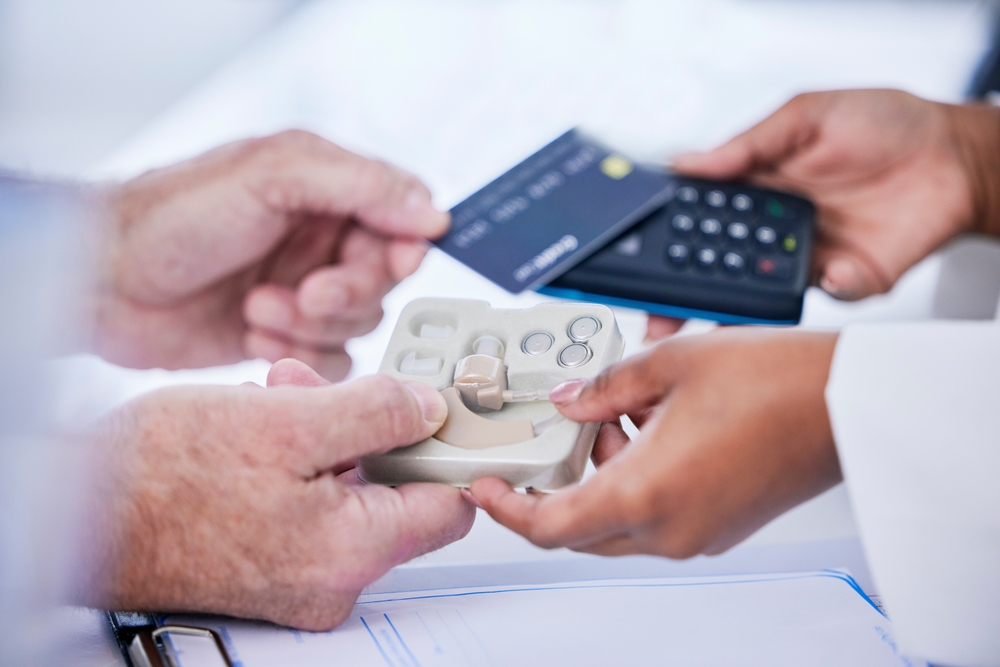
When exploring treatment options for age-related hearing loss or presbycusis, the initial clinical cost of amplification devices can be striking. Based on the sophistication of the digital signal processing and the required audiometric programming, these devices span a wide pricing spectrum. Such a capital requirement often surprises families, leading them to prematurely halt their pursuit of better auditory health.
Although the retail price is substantial, alternative funding mechanisms change the clinical landscape. Most individuals fail to recognize that the initial quote is infrequently the true financial burden after adjustments. By leveraging private insurance benefits, tax-advantaged health funds, and structural payment programs, the net cost can be minimized.
We provide this breakdown of available funding avenues to empower your decision-making before your consultation, optimizing your path to enhanced sound localization.
Navigating Insurance Policy Language for Hearing Aid Benefits
Before expecting to finance the entire purchase independently, verify your existing medical coverage parameters.
Commercial insurance programs exhibit a broad diversity in how they classify and fund auditory medical equipment. A number of policies indemnify a fraction of the cost, contrasted with plans that provide a capped benefit cap. In contrast, certain insurance products offer zero provision for auditory assistive devices. To find out more, call the number on your insurance card and ask about hearing aid benefits. You should explicitly confirm benefit renewal intervals, whether post-fitting care is covered, and contracted clinic networks.
If you’re on Medicare, it’s important to know that Original Medicare (Parts A and B) does not cover hearing aids. Nevertheless, a significant number of managed Medicare Advantage (Part C) options feature ancillary vision and hearing benefits.
For those on Medicaid, coverage depends on where you live. A selection of states do extend hearing aid benefits to eligible adults, making a proactive provider query essential.
Leveraging Pre-Tax HSA and FSA Vehicles for Audiological Purchases
Individuals contributing to an HSA or FSA possess a specialized tax-mitigation tool perfectly suited for audiological procurement.
The federal government recognizes therapeutic hearing systems as allowable medical expenses, facilitating tax-free acquisition. That alone can make a big difference. For example, if you’re in a 22% tax bracket, a $2,000 purchase effectively costs closer to $1,560. Crucially, HSA balances carry over across fiscal periods, whereas FSA assets generally operate on a strict annual expiration schedule. That means it’s especially important to use those funds before they’re lost! Both custom-programmed medical devices and eligible over-the-counter options are valid selections, making a baseline balance check highly prudent.
Hearing Aid Financing: Spreading Out the Cost Over Time
Many hearing care practices offer hearing aid financing options that allow you to spread payments over time instead of paying everything up front. These specific arrangements, often administered via platforms such as CareCredit, frequently feature promotional interest-free windows. That means you don’t have to choose a lower-quality device just to keep costs down in the short term.
Addressing installment options is a commonplace component of the overall treatment plan development. If budgetary constraints are a factor in your decision-making, ensure you communicate this to your provider. Keep in mind that these diverse consumer pathways were developed to address these precise medical realities! And it because people shouldn’t have to put a huge strain on their finances just to be able to care for their health, including their hearing.
Maximizing VA Healthcare Services for Service-Connected Hearing Deficits
Because acoustic injury is statistically ubiquitous among military personnel, the VA provides extensive audiology benefit frameworks.
Eligible veterans can receive hearing aids at no cost through VA healthcare. Regardless of whether your auditory deficit is directly tied to your service record, your general enrollment status can open these pathways. If you haven’t explored your VA benefits yet, it’s worth reaching out to your local VA facility or asking your provider for help navigating the process.
Civic and Non-Governmental Resources for Affording Hearing Technology
A variety of secular charities and regional foundations are dedicated to subsidizing the cost of necessary amplification. Organizations like the Starkey Hearing Foundation and Lions Club International offer assistance to qualifying individuals. Some states also have hearing aid programs for low-income adults.
Although these civic grants frequently carry rigid income thresholds and waiting intervals, they are highly valuable when commercial insurance fails. You can easily audit the baseline criteria on the respective organization’s web platform to begin the application process.
OTC Hearing Hardware: A Technical Assessment of Lower-Cost Auditory Options
The OTC retail segment offers a highly economical alternative, with average pair pricing falling between several hundred and one thousand dollars. Such devices are clinically appropriate for mild or early-stage moderate presbycusis in self-directed adult users.
However, omitting an individualized audiometric diagnostic fitting frequently leads to suboptimal user satisfaction and poor device retention. For individuals demonstrating pronounced or complex sensory deficits, physician-fitted clinical devices consistently yield superior acoustic gain stability.
Rather than purchasing an OTC model out of economic necessity, investing in a professional evaluation establishes your true baseline needs. Retail devices function adequately as a temporary placeholder while awaiting insurance pre-authorization or institutional grant approvals. They’re better than nothing and offer a decent temporary fix, but they’re not ideal for the long term.
Hearing Aid Costs: Let’s Figure Out Your Options Together
We routinely guide individuals through the complexities of healthcare insurance and medical credit systems. Most individuals are pleasantly surprised by the diversity of available payment pathways once analyzed.
Provide your health insurance credentials at your intake visit, allowing us to audit your benefits and maximize your available financial credits. Contact our scheduling desk today or utilize our digital portal to book your comprehensive diagnostic audiology appointment. We’re happy to help you find a solution for hearing aid costs that feels manageable.
