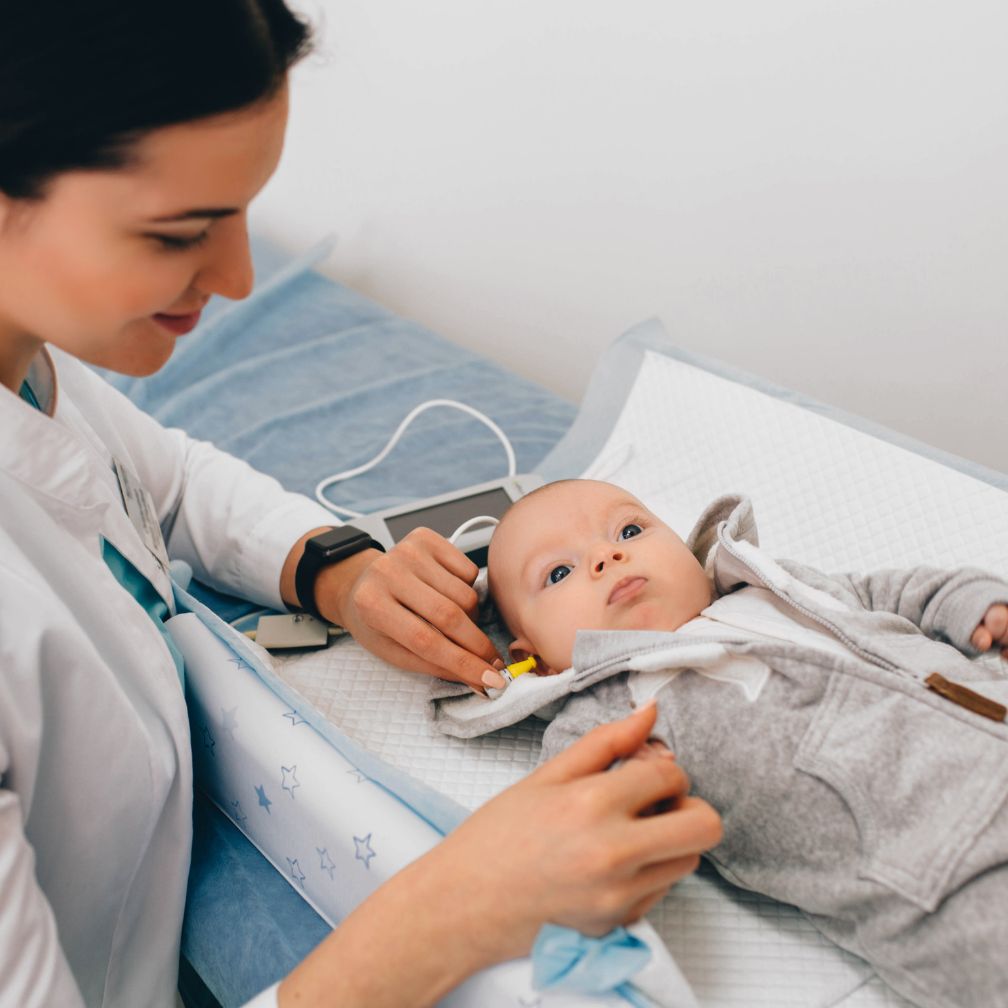
For young parents, learning that their baby exhibits auditory issues consistently seems heartbreaking and scary. The encouraging message is clear: by utilizing early testing and supportive therapies, children with auditory issues will easily succeed. Positively, these infants can master verbal abilities, social skills, and solid bonds within their surroundings, attaining a truly rich existence!
Combining custom pediatric hearing aids with surgical cochlear implants provides two remarkable clinical tools for supporting infants with hearing deficits. Within this detailed breakdown, we assess their core operations and outline how to select the ideal device for your child.
Demystifying Hearing Deficits in Newborns
Hearing deficits among babies routinely trace back to diverse medical influences, including:
- Underlying genetic predispositions (even while lacking verified familial lineage)
- Targeted in-utero viral infections including cytomegalovirus (CMV) and rubella
- Birth-related trauma, featuring neonate oxygen loss or early delivery
- Certain intensive care medications applied in newborn intensive care facilities
Which phase matters most? Rapid clinical confirmation. This necessity explains why babies across the United States undergo auditory checks prior to leaving the birth facility. Expert pediatric auditory doctors systematically apply the universal “1-3-6” diagnostic framework:
- Initial baseline screening executed before 1 month of life
- Comprehensive diagnosis finalized within 3 months
- Formal intervention (deploying corrective equipment or speech habilitation) established inside 180 days post-birth
Meeting these diagnostic benchmarks provides babies an ideal foundation for strong speech, linguistic, and brain development. In the event you want clarification surrounding screening protocols, your personal pediatrician stands eager to help!
Understanding Amplification Devices for Infants
Regarding babies diagnosed with mild to severe auditory loss, electronic hearing aids typically represent the preferred starting point. Such light, wearable units intensify sound signals, allowing babies to detect verbal language and background sounds far more distinctly.
Pediatric-grade hearing devices prove to be:
- Clinical grade safe for application in newborns just a few weeks after birth
- Crafted with cushioned, ergonomic ear molds that get remade as the child expands
- Equipped with secure battery housing closures and child-focused protective features
- Uniquely tuned by a licensed pediatric audiologist to match your baby’s exact hearing needs
As your child matures, these devices demand ongoing professional tuning to preserve physical comfort and functional efficacy.
Pediatric Cochlear Implants: An Advanced Solution
When a baby is identified with severe to profound sensorineural deficits and fails to show adequate progress with standard hearing aids, a cochlear implant may be advised. Unlike standard acoustic hearing aids, cochlear implant devices:
- Require surgical implantation within the auditory bone structure performed under controlled clinical conditions
- Directly bypass compromised areas of the inner ear anatomy
- Process incoming sound into refined electrical impulses that stimulate the auditory nerve directly
Pediatric cochlear implant systems remain:
- Clinically approved by the FDA for application in babies aged 9 to 12 months and older
- Remarkably effective when paired with early auditory-verbal therapy and consistent family engagement
- Cleared strictly after detailed multi-disciplinary testing by an expert audiologist and ENT specialist
This evaluative framework encompasses high-resolution imaging, comprehensive audiometric testing, and detailed consultations regarding anticipated long-term progress.
Hearing Aids vs. Cochlear Implants: What’s the Difference?
- Mild to severe hearing loss relies on Hearing Aids; Severe to profound hearing loss requires Cochlear Implants
- Non-Invasive: Hearing Aids; Invasive (Surgical): Cochlear Implants
- Physical sound amplification: Hearing Aids; Electrical signal stimulation conversion: Cochlear Implants
- Intervention starts in early infancy: Hearing Aids; Starts at 9-12 Months: Cochlear Implants
Concluding Guidance on Pediatric Hearing Technology
If your newborn faces a confirmed hearing impairment diagnosis, you have options and robust community resources exist to help you. With the help of pediatric hearing specialists, many children go on to develop language skills that are on par with their peers.
Regardless of whether your baby requires wearable hearing aids or a surgical cochlear implant, prompt intervention produces a lifelong positive impact.
Are you seeking answers about your child’s overall hearing wellness? Reach out to our specialists today to schedule a thorough assessment and individualized management strategy.
